Amaze GO!
- 4.9
- Rating
- 100.00M
- Installs
- Free
- Price

 Analysis by App-foxy
Arrows GO! is the kind of puzzle game I can open for a quick mental reset and still find myself thinking about several moves later. Its central idea is easy to understand: clear arrows from the board by sending them in the direction they point. The challenge comes from recognizing which arrows are actually free to move and which ones are blocked by the surrounding layout. That simple relationship between direction, space, and order gives the game a pleasantly focused identity.
Developed by Oakever Games, this free puzzle title is aimed at Everyone and runs on Android devices using version 7.0 or later. Its current version is 1.15.1, and the game has already passed over ten million installs. A 4.6 average from around eighty-nine thousand ratings suggests that the basic format connects with a broad audience, but my experience is more useful than the headline number: this is best understood as a calm, visual logic game rather than a fast arcade challenge.
The first thing I noticed was how quickly the game communicates its rule. The arrows are not asking me to learn a complicated control scheme, memorize symbols, or manage a character. I look at the board, identify a possible path, and tap an arrow when I believe it can leave. That directness makes the opening moments welcoming, especially if I want something I can understand without reading a long tutorial.
You May Also Like

 AccuWeather: Weather Radar
AccuWeather Review: A Quick, Clear Forecast for Everyday Decisions
For everyday plans, the best forecast is the one you can understand quickly. AccuWeather makes rain timing, radar, and local conditions easy to act on, with a few trade-offs.

 Hill Climb Racing
Why Hill Climb Racing Still Turns Crashes Into One More Run
A tiny car, a bumpy hill and one more upgrade: Hill Climb Racing keeps resurfacing because its simple chaos makes every near-miss feel personal.

 AliExpress - Shopping App
AliExpress Makes Global Shopping Feel Personal, but Shoppers Bear the Risk
AliExpress turns a global marketplace into a pocket-sized discovery engine. Its reach is useful, its shopping loop compelling, and its trade-offs easy to miss.

 Lords Mobile: Kingdom Wars
Lords Mobile Is a Kingdom-Building Routine, Not a Quick Match
A case-by-case verdict on the building, battles, device demands, and social commitments that make Lords Mobile rewarding for some players and exhausting for others.

 PDF Scanner app - TapScanner
TapScanner Makes Paperwork Easier to Capture, Check, and Share
TapScanner makes scanning with a phone feel less like a rescue operation and more like a dependable step in getting work done. Its capture tools are useful, though not flawless.

 Block Blast!
 Shows How Much a Puzzle Game Can Leave Out
A quiet grid game shows why puzzle players increasingly value instant clarity, repeatable skill and low-pressure play—and where the genre still needs to catch up.
More From Our News Desk
View All News


A quiet puzzle world built from direction and space
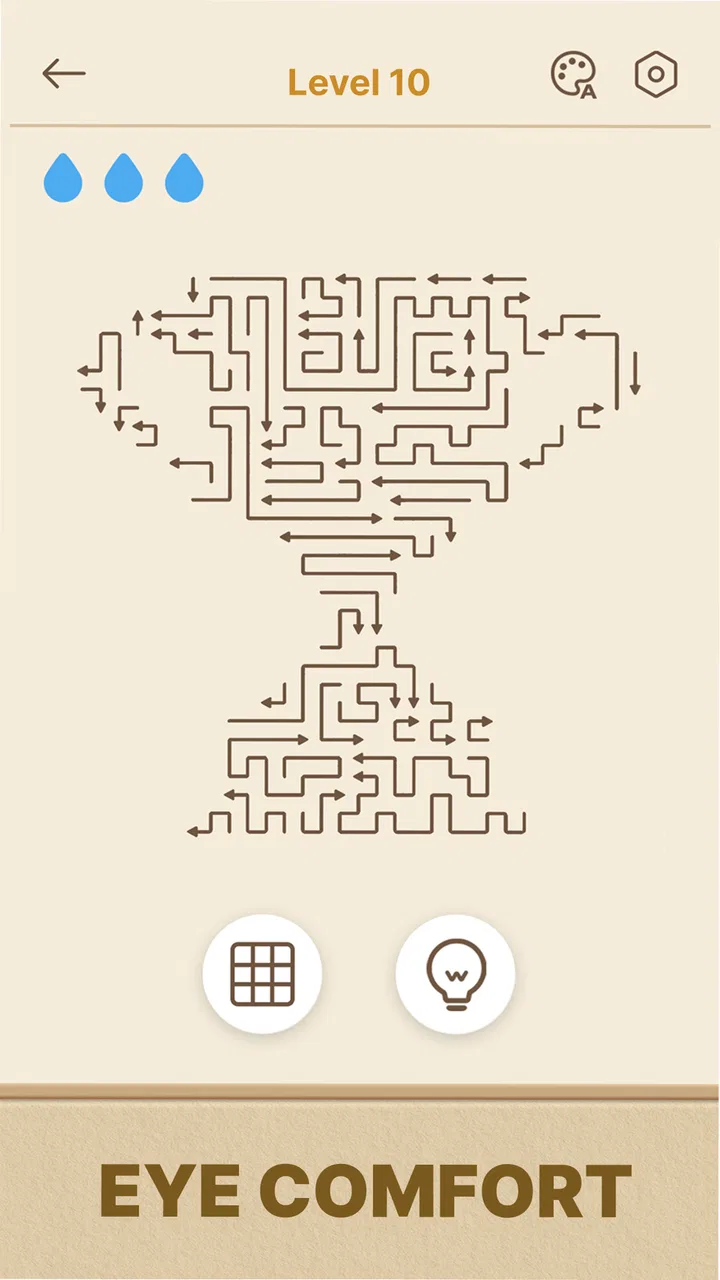
The visual language is centered on arrows, clean board layouts, and the changing amount of available space. That sounds modest, but it is exactly what the design needs. Because every piece represents both an object and a possible movement direction, the board itself becomes a visual sentence. I read it by asking which shapes are pointing toward freedom and which are waiting behind another decision.
I like that the setting does not compete with the puzzle. There is no elaborate story demanding attention before I can play, and the game’s identity comes from the behavior of the pieces. The result feels closer to a compact brain-training exercise than to a traditional adventure. That focus is a strength when I am playing on a short break, on public transport, or while waiting for an appointment.
The art direction also supports the game’s mood by making the main interaction easy to scan. In a puzzle based on blocked movement, visual confusion would feel unfair. Here, the important question remains visible: can this arrow travel out, or does another piece still occupy its path? I found myself looking at the whole arrangement before tapping rather than hunting through menus or secondary indicators.
That clarity creates an interesting trade-off. Players who want expressive characters, a story setting, or a strong sense of place may find the presentation spare. The game does not appear to be trying to build a large fictional world around its boards. Instead, it creates a small world governed by directional rules. For me, that restraint works because the atmosphere comes from solving the layout, not from decoration placed around it.
Why the board feels readable rather than empty
A minimalist puzzle can easily become visually dull, but the arrows give the screen a built-in sense of movement. Even before I make a tap, the board suggests possible routes. A cluster may look crowded at first, then reveal a clean sequence once one obstructing arrow is removed. That visual transformation is more satisfying than simply watching a score increase because I can see the problem becoming simpler in front of me.
One useful habit is to inspect the outer edges first. Arrows with an unobstructed route are often the safest starting points, while pieces buried in the center deserve more caution. I do not treat this as a fixed formula, because removing an obvious arrow can sometimes change the relationships around it. Still, edge scanning gives me a reliable first pass and prevents random tapping.
Another practical approach is to identify arrows that are mutually dependent. If one piece blocks the path of another, I ask which removal would open more space. This is more efficient than choosing the first apparently movable arrow every time. The insight matters because the game’s difficulty is not only about spotting legal moves; it is about choosing a useful order.
That makes the visual design part of the difficulty curve. A board may contain several arrows that look available, but not all of them are equally valuable. The clean presentation lets me compare those options without the interface becoming the obstacle. When I make a mistake, I generally understand that the issue was my reading of the board rather than a confusing visual effect.
Sound that supports concentration
The sound design works best when I think of it as a pacing tool rather than a performance. Each interaction has a small sense of completion, and the audio feedback helps confirm that a tap has registered. In a game where the main pleasure comes from a sequence of correct decisions, that confirmation gives the board a gentle rhythm.
I would not choose this game for a dramatic soundtrack or a powerful audio spectacle. Its mood is quieter and more functional. That is appropriate for the mechanic: loud or overly urgent sound would push me toward impulsive taps, while the puzzle rewards looking first and acting second. The restrained presentation leaves room for concentration.
In everyday use, I found the game particularly comfortable when played with low volume. The visual feedback carries most of the meaning, so I can still follow the puzzle when I am in a shared space or do not want sound from my phone. That flexibility is important for a casual title. It means the game can fit into more situations without requiring a fully immersive setup.
The relationship between sound and movement also affects perceived pacing. A successful sequence of removals can feel almost meditative when I pause between decisions, while a rushed sequence turns the same board into a test of impulse control. I prefer the slower approach. The game is more enjoyable when I let the board settle after each move and reassess the remaining arrows instead of treating every tap as part of a race.
That calm rhythm will not suit everyone. If I want constant pressure, countdown tension, or quick reactions, this is not the right puzzle format. The appeal is in controlled observation. The game gives me space to think, and players who enjoy action-heavy pacing may interpret that space as a lack of excitement rather than as a benefit.
Where the mechanics and mood meet
The central mechanic fits the atmosphere because the rules are both tactile and orderly. Tapping an arrow is immediate, but deciding whether to tap it is thoughtful. That balance gives the game a low barrier to entry without making every board mindless. I can begin with a simple visual question and gradually start planning several removals ahead.
One of the strongest details is the way a mistake can change my understanding of the entire layout. I may believe that a certain arrow is the obvious first move, only to discover that it leaves a more awkward arrangement behind. The lesson is not simply “find a legal move.” It is “find the move that improves the board.” That distinction gives the puzzle more depth than the short store summary might suggest.
For a more reliable workflow, I use three passes. First, I locate arrows with completely open paths. Second, I check whether removing one of them will expose a blocked neighbor. Third, I pause before touching a central piece and look for a sequence rather than a single move. This method is not a guarantee of success, but it reduces careless taps and makes difficult layouts feel more manageable.
I also recommend resisting the urge to clear the most visually prominent arrow. Large or central pieces naturally attract attention, yet they may be the least useful starting points. The better move is often the one that creates a new line of sight. In that sense, the game rewards spatial reasoning and patience more than speed.
This makes it suitable for several kinds of players. I can see it working for someone who enjoys short logic sessions, for a parent looking for an age-appropriate puzzle, or for a player who wants a quieter alternative to match-three games. It can also serve as a small concentration exercise between demanding tasks. I would not describe it as a formal educational tool, but it does encourage planning, visual tracking, and awareness of order.
At the same time, I would skip it if my priority is deep narrative progression or a broad collection of puzzle types. The arrow-clearing idea is the experience, not merely one activity inside a larger package. Players who need constant novelty may eventually want a game with word puzzles, physics challenges, or number systems mixed together. Here, the satisfaction comes from exploring variations within one focused rule set.
How it compares with familiar puzzle alternatives
Compared with match-three games, Arrows GO! asks for less pattern chasing and more movement planning. There is no need to build a chain of colors or react to a changing cascade. I can study the board and make a deliberate choice. That makes it a better fit for quiet concentration, although it may feel less immediately rewarding to someone who enjoys colorful chain reactions.
Compared with word puzzles, it removes language from the challenge. I do not need a particular vocabulary or cultural knowledge to understand the objective. The difficulty comes from spatial relationships, so it is accessible across age groups and language backgrounds. That is one reason the Everyone rating feels consistent with the way I experienced the game.
Compared with classic sliding-block puzzles, the interaction is more direct because I am clearing directional pieces rather than repeatedly repositioning objects. The board can still produce the same kind of planning tension, especially when one move affects several future options, but the action feels lighter. I can finish a small session without committing to a long, intricate setup.
That directness is also the game’s main limitation. A player who loves elaborate multi-step systems may find the rules too narrow. The experience depends on how well the layouts keep presenting meaningful choices. When a board is obvious, I move through it quickly; when the arrangement creates dependencies, the game becomes much more engaging. The difference between those moments is noticeable, so my enjoyment depends on the quality and variety of the individual puzzles.
The game is free, which makes trying it easy, but free access does not automatically make every session equally valuable. I judge it by whether a board gives me a reason to pause and reconsider. When it does, I feel that I have solved something rather than merely completed a sequence of taps. When it does not, the experience can become routine.
A realistic place for it in a daily routine
Imagine I have ten minutes before a meeting. I do not want to start a story game that I will need to remember later, and I do not want a competitive match that leaves me tense. I can open this puzzle, inspect one board, and focus on a contained problem. If I finish quickly, I can stop without feeling that I abandoned a larger mission. If the layout is more demanding, I can use the time to practice looking for dependencies.
Another useful situation is the end of the day, when I want something active enough to hold my attention but not so intense that it keeps raising my energy. The quiet visual language and measured interaction suit that moment. I still need to think, but the thinking is narrow and practical: which arrow should leave first, and what space will that create?
For younger players, the basic rule is approachable, but I would still encourage an adult to play alongside them at first if they are not used to spatial puzzles. The game does not require complicated reading, yet the best move may not be the most obvious one. Talking through why an arrow is blocked or why an edge piece is useful can turn a short session into a shared reasoning activity.
For older players, the appeal is less about reflexes and more about maintaining a visual plan. I appreciate that the game does not demand fast fingers to be enjoyable. A careful player can compete with their own previous understanding of the board, even without treating the experience like a score-chasing contest.
Small frictions that affect long-term appeal
The clean design can become repetitive if I play for too long in one sitting. Because the core action remains consistent, I prefer several short sessions over an extended marathon. That is not a serious flaw for a casual puzzle, but it is worth knowing before choosing it as a main game. It works best as a focused companion rather than as the only title on my phone.
The other friction is psychological: when I see an arrow that appears movable, I want to tap it immediately. The game encourages that impulse visually, then teaches me that availability and usefulness are different things. Players who dislike trial and error may feel frustrated when a seemingly reasonable order leads to a less convenient board. I found that treating each move as a hypothesis makes the experience more satisfying.
My advice is to pause after every meaningful removal, especially when a central route opens. Do not assume that the newly visible arrow is automatically the next choice. Recheck the whole board. This extra moment often reveals a better order and turns the game from casual tapping into a compact planning exercise.
The current version, 1.15.1, gives the game a clear ongoing product identity, while Oakever Games keeps the presentation focused on the arrow mechanic rather than surrounding it with unnecessary complexity. With over ten million installs and a strong average rating, it is easy to see why the format has broad appeal. Still, popularity should not obscure the personal fit: I enjoy it because the game is contained, readable, and calm, not because it tries to be everything at once.
My atmosphere verdict
Arrows GO! succeeds when its art, sound, and pacing stay subordinate to the act of reading the board. The arrows create a simple visual world, the audio reinforces the feeling of progress without overwhelming it, and the measured rhythm gives each decision room to matter. I never felt that the presentation was pulling me away from the puzzle’s central question.
I would recommend it to anyone who wants a free, approachable logic game for short sessions and prefers deliberate choices over frantic reactions. It is especially appealing if you like puzzles that can be understood instantly but reward a more careful second look. The most useful way to play is to scan the edges, identify dependencies, and choose moves that open several possibilities rather than merely removing the first available piece.
I would look elsewhere if I needed a story-rich game, a constantly changing set of mechanics, or a high-pressure challenge. For those needs, a narrative adventure, a competitive puzzle game, or a more complex strategy title would be a better match. But when I want a quiet board, a clear rule, and a small problem that asks me to slow down, Arrows GO! earns its place in my rotation. It is not ambitious in every direction, and that is precisely why its playable mood feels coherent.
FAQs for Amaze GO!
01What is Arrows GO! and what makes it unique?
Arrows GO! is an engaging puzzle game that combines strategy and quick reflexes. Players guide arrows through intricate mazes filled with obstacles and challenges. Its unique blend of dynamic gameplay and visually appealing graphics sets it apart from other puzzle games. The game also offers customizable arrow designs and levels, enhancing the user experience.
02Is Arrows GO! free to play, or are there in-app purchases?
Arrows GO! is free to download and play, offering a variety of levels without any cost. However, the game includes optional in-app purchases such as additional lives, special arrow designs, and ad-free experiences. These purchases are not necessary to progress but can enhance gameplay for those who choose to invest.
03What are the system requirements for Arrows GO!?
Arrows GO! is compatible with most modern Android and iOS devices. For Android, it requires version 5.0 or higher, while iOS users need iOS 11.0 or later. The game is optimized for both smartphones and tablets, ensuring smooth performance across different devices.
04Does Arrows GO! require an internet connection?
Arrows GO! can be played offline without an internet connection, making it a great choice for on-the-go gaming. However, an internet connection is required for certain features like leaderboard updates, in-app purchases, and syncing progress across devices.
05How does Arrows GO! handle player data and privacy?
Arrows GO! prioritizes player privacy by adhering to strict data protection guidelines. The game collects minimal data necessary for gameplay and does not share personal information with third parties. Players have control over their data, with options to manage or delete their information within the app settings.
Pros
- Intuitive controls make gameplay easy to learn.
- Vibrant graphics enhance the user experience.
- Offers a variety of challenging levels.
- Regular updates introduce new features.
- Lightweight app
- doesn't consume much storage.
Cons
- In-app purchases can be expensive.
- Occasional ads interrupt gameplay.
- Limited offline gameplay options.
- Some levels feel repetitive over time.
- Requires a stable internet connection.

Amaze GO!
Gallery